

Within the framework of national and European funding programs, such as NSRF (ΕΣΠΑ) 2021-2027, the allocation of capital for the creation or upgrade of infrastructure (buildings, outdoor spaces, etc.) is now accompanied by a non-negotiable obligation: ensuring universal accessibility for all categories of People with Disabilities (PwD). This is not merely a term, but a fundamental criterion that determines the eligibility and sustainability of your project.
At Bibikas Special, we specialize in accessibility solutions and provide the necessary expertise to help you meet the specific requirements of national legislation, turning an obligation into a competitive advantage.
The Inseparable Link: Infrastructure Financing and Accessibility Obligations
As clearly defined by the competent authorities and guidance texts (such as the “Clarifications for ensuring accessibility for people with disabilities”), in cases of funding/grants for infrastructure (buildings, outdoor spaces, etc.) or funding/grants that include interventions in infrastructure as eligible costs, ensuring their accessibility is mandatory. This applies to all categories of people with disabilities – those with physical disabilities (e.g., mobility issues), sensory disabilities (e.g., deafness/blindness), etc. – based on the corresponding national legislation.
These requirements cover both access to the physical environment and outdoor spaces (including archaeological sites, beaches, green spaces, groves, etc.) and access to building infrastructure and the surrounding outdoor areas of plots.
The Legislative Framework for Infrastructure: Key Provisions
Ensuring accessibility in infrastructure is based on specific provisions, including:
- Law 4067/2012 (New Building Regulation – NOK), Articles 26 and 27: These articles set the general accessibility requirements for new buildings and major renovations, making the unobstructed movement of PwDs mandatory in all common areas.
- Ministerial Decision (M.D.) 52478/2006 (GG 18/B/2007) – “Special arrangements for the service of PwD in existing buildings”: This Ministerial Decision is critical for existing facilities, defining the specific interventions for serving PwDs in specific categories of buildings, such as:
- Public Services, Legal Entities under Public Law (N.P.D.D.), and Legal Entities under Private Law (N.P.I.D.) of the broader public sector.
- Local Government Organizations (O.T.A.) of the 1st and 2nd degree.
- Public Benefit Organizations.
- Banks and currency exchange offices.
- Buildings for public use (indicatively, assembly areas, shops, offices, etc., depending on specific interpretations and clarifying circulars).
- Tourism Accommodation Legislation: Specific provisions concerning accessibility in hotels and other tourist units.
Latest Legislative Developments: Law 4994/2022 for Products & Services
Beyond infrastructure requirements, it is important to be aware of Law 4994/2022 (GG 215/A/18-11-2022), which incorporates Directive (EU) 2019/882 (European Accessibility Act). This law extends accessibility obligations to a wide range of products and services (e.g., banking, telecommunications, e-commerce). Full implementation takes effect on June 28, 2025, making adaptation imperative. While it primarily concerns digital and functional services, a company’s overall accessibility strategy must also cover this area.
Basic Technical Accessibility Requirements (Indicative)
To achieve accessibility in infrastructure, legislation defines specific standards for:
- Horizontal Access: Sufficient width for corridors and doors (> 0.85 m clear opening).
- Vertical Access (with Bibikas Special solutions):
- PwD Ramps: Maximum gradient of 5% (or 8% in exceptions), minimum width, and landings.
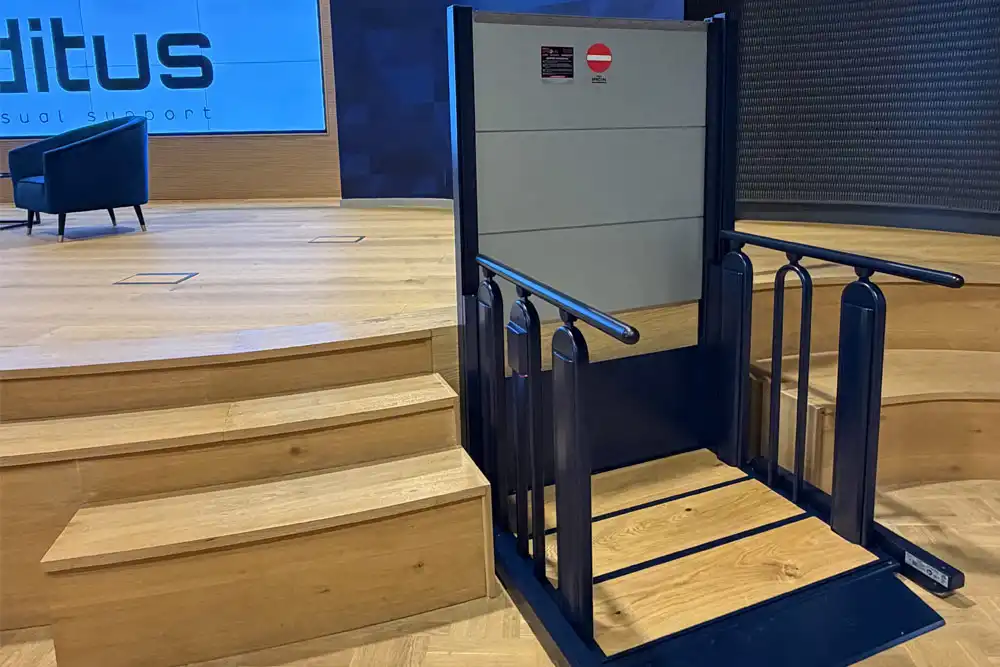
- Platform Lifts & PwD Hoists: Minimum cabin/platform dimensions for a wheelchair (e.g., 1.00 m x 1.25 m), compliance with EN 81-40 and EN 81-41 standards.
- Safety: Sensors, emergency buttons, and backup power supplies.
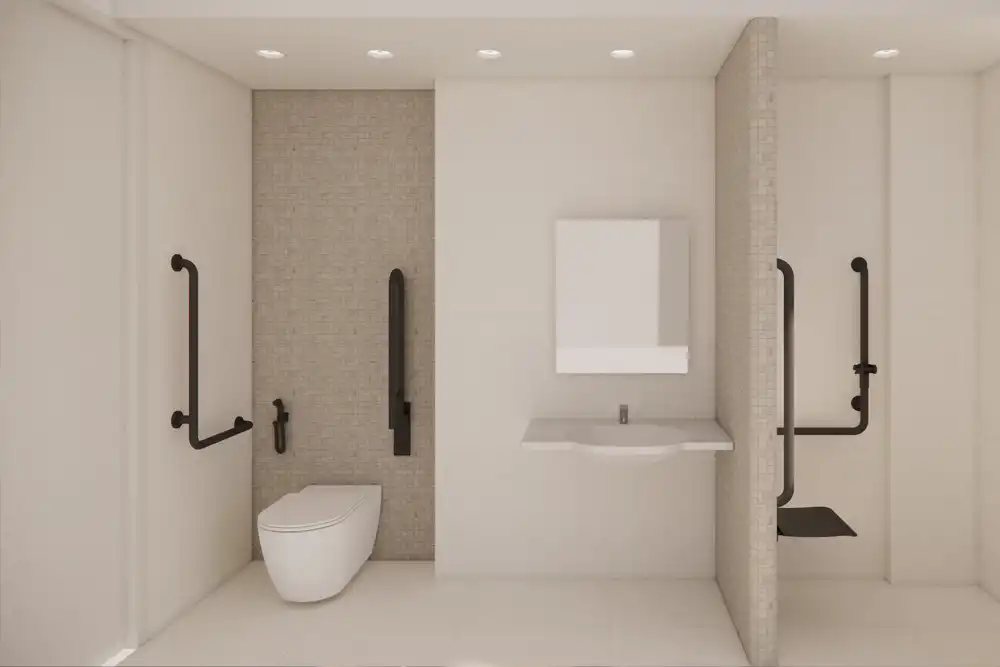
- Access for Sensory Disabilities: Depending on the space and requirements, audio and visual cues, tactile markings (Braille), or hearing loop systems may be required.
Bibikas Special: Your Strategic Partner for Compliance and Financing
At Bibikas Special, we have the specialization and experience to guide you through fulfilling accessibility requirements, especially when they are linked to funding programs. We offer a wide range of certified solutions for the built environment, such as:
- Platform Lifts and PwD Hoists: For seamless vertical movement.
- PwD Ramps: A full range of ramps (fixed, portable, folding, vehicle) that meet the strictest specifications.
- Stairlifts (Chairlifts): For private or semi-public spaces where they are permitted as a solution.
We undertake the onsite inspection of your space, the preparation of a customized study based on current legislation, the procurement and professional installation of the systems, as well as technical support. We ensure that your funding application file is complete regarding accessibility requirements and that your space is truly welcoming and functional for all.
Don’t let accessibility become an obstacle to your business growth!
Contact Bibikas Special today for a free consultation. Let us guide you in achieving universal accessibility and successfully accessing funding programs.